Leo Reich has built a comedy around a familiar disappointment: being young in a big city is rarely as glamorous as television promised. In It Gets Worse, friendship does not tidy up every mistake, romance does not automatically produce a better person, and knowing the right language for your problems does not mean you can solve them. With the series arriving on Paramount+ in the United States on November 6, his distinctly London-shaped take on early adulthood now has an American audience to unsettle.
In a Variety interview published that day, Reich discussed the gap between imagining your twenties and actually living them. He created, wrote and stars in the series, playing Ethan, one of three friends whose connection is tested after they stop sharing a home. His explanation makes the show’s title sound less like a throwaway joke than an operating principle. These people expect their lives to acquire meaning through experience. The comedy keeps asking what happens when experience mostly brings another awkward conversation.
London without the fantasy filter
London is not an interchangeable address for Reich. He grew up there and told Variety that the city remains where his relationships and sense of belonging are rooted. He briefly tried living in New York, encouraged partly by the films and programmes he loved, but found that the imagined version of the city did not match his experience. That disappointment has an obvious connection to his series: a place can be full of possibilities without delivering the life you pictured.
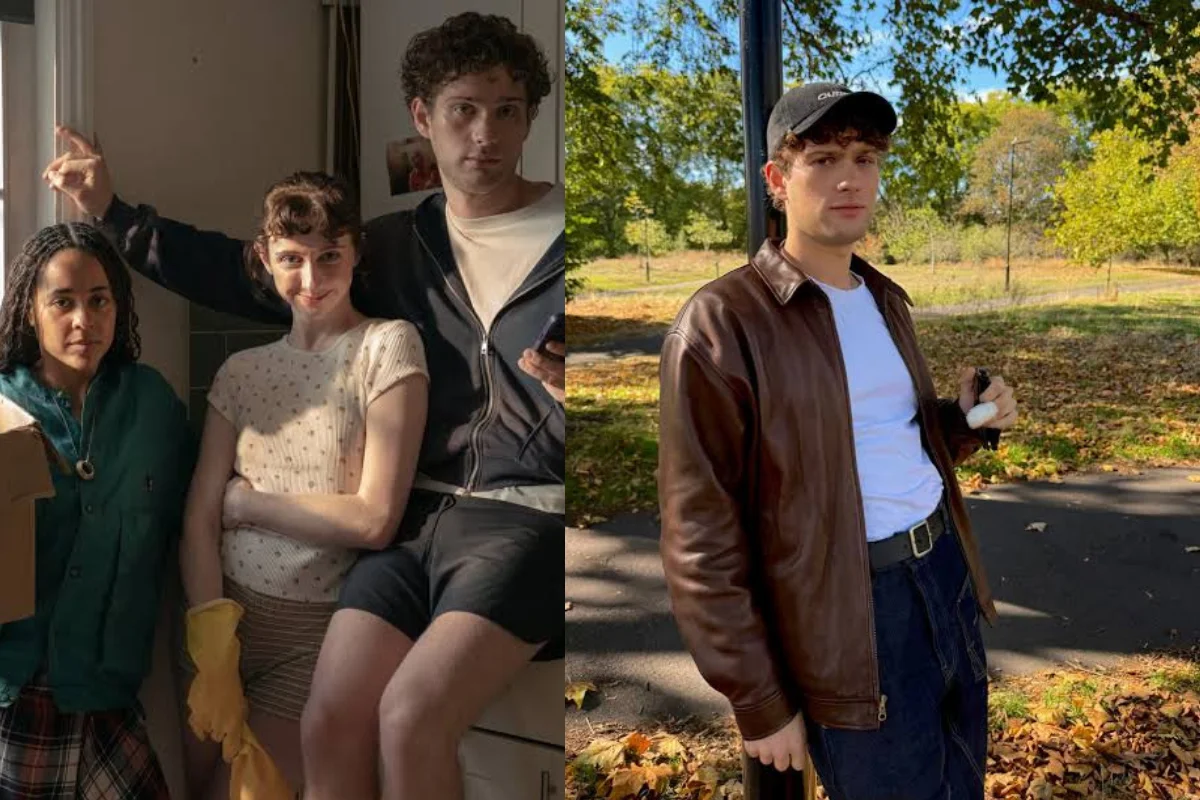
The show follows Ethan, Abi and Sam, played by Reich, Emily Fairn and Olive Gray. Their move out of a shared flat changes the everyday structure that previously held their friendship together. It is a useful starting point because friendship often feels effortless when everyone lives within shouting distance. Once people have separate homes and different routines, affection has to compete with practical arrangements, personal disappointments and the temptation to disappear into your own problems.
Reich describes the characters as people who have absorbed stories about what young adulthood should look like. They are not simply having experiences; they are evaluating whether those experiences make them interesting. There is a sharp comic difference between falling in love and wanting to be the sort of person with a memorable love story. The same tension applies to work, friendship and the flattering explanations people build around decisions that may not deserve them.
Three friends, three kinds of avoidance
Ethan’s romantic searching sits alongside his reluctance to find a job. Abi tries to hold on to an unsatisfying relationship because she is attached to a conventional picture of happiness. Sam, a struggling writer, has a complicated living arrangement involving her ex. Those starting positions are different enough to create friction, but they share a common problem: each character has a persuasive account of why staying stuck might really be a meaningful choice.
That is a more specific idea than simply calling the series a portrait of Gen Z. A generation label can flatten millions of people into a collection of habits. Reich instead works with characters who want to feel exceptional while facing recognisable disappointments. The humour comes from the distance between their self-image and their behaviour. They may understand the vocabulary of personal growth, but understanding something intellectually is not the same as managing it when another person is involved.
Although parts of the material draw on Reich’s experiences, he told Variety that the three central characters are not straightforward portraits of particular friends. He sees aspects of himself across them. Ethan’s romantic encounters likewise combine impressions of different people rather than documenting one relationship. That distinction matters. The series is constructed fiction, not a promise that viewers can identify a real person behind every embarrassment or trace each scene to an event in the writer’s life.
The guests are part of its comic world
The supporting lineup gives the show an unusually recognisable collection of visitors. Andrew Scott plays a therapist, while author Zadie Smith supplies narration. Amelia Dimoldenberg, Lena Dunham, Blake Harrison and BabyMorocco also appear. Their presence widens the world around the central trio without changing its basic concern: people attempting to manage how they are seen. A prestigious guest list may attract viewers, but the friends still have to carry the emotional mess at the centre.
Dunham’s involvement has a particularly personal background. Reich grew up admiring Girls, and she later saw a recording of his stand-up show Literally Who Cares?! He went on to appear in her series Too Much, his first screen acting role. According to his account in Variety, she also offered feedback on the It Gets Worse pilot and volunteered to appear. It is an unusually direct connection between a creative influence and the practical making of a new comedy.
That connection does not require treating Reich’s series as a replacement for Girls. The influence is useful because both projects are interested in people who can describe themselves more elegantly than they can behave. London supplies a different social environment, and Reich’s perspective determines which embarrassments receive attention. His description of the writing suggests an interest in exposing self-importance from the inside, with enough recognition to make the joke uncomfortable rather than merely dismissive.
Awkwardness instead of polished lessons
The interview also addresses the show’s approach to sex. Reich explained that he finds the subject funny and is interested in experiences that do not resemble perfectly arranged screen intimacy. Rather than presenting that choice as a declaration about an entire generation’s preferences, he described it as a comic instinct. People can be confident about their identities and still behave uncertainly in a bedroom. That gap offers material without requiring every scene to deliver a message.
It also places his screen work within a broader tradition of comedians finding stories in uncomfortable personal territory. Our earlier coverage of Kiri Pritchard-McLean’s personal approach to stand-up offers a different example of how lived experience can become performance. The subjects and formats are not the same, but the creative challenge is similar: shape recognisable difficulties into something audiences can laugh at without pretending the difficulties vanish.
For American viewers, the immediate practical detail is straightforward. Paramount’s announcement sets the US arrival for November 6, with all six episodes available through the Paramount+ Premium plan. The series premiered on Channel 4 in the UK on October 22. Those separate release dates explain why British reactions were already circulating before the American launch; they do not indicate that viewers in every country have the same platform or subscription access.
A future that remains unwritten
Reich has ideas for a possible second season, but enthusiasm is not a renewal announcement. In his Variety conversation, he discussed wanting another opportunity to explore these characters while acknowledging that cancellation remained possible. For now, the confirmed story is the first season and its wider release. Anything beyond that should be understood as a creator’s hopes, not a production timetable.
What makes his account appealing is that he does not sell the series as a cure for the anxieties it observes. Ethan, Abi and Sam are not advertised as exemplary friends or reliable guides to adulthood. They are people trying to make an untidy life resemble a satisfying narrative. Reich’s comic proposition is that the effort itself can be revealing, ridiculous and occasionally painful. Whether or not their circumstances improve, there is plenty to recognise in wanting the next chapter to explain the last one.