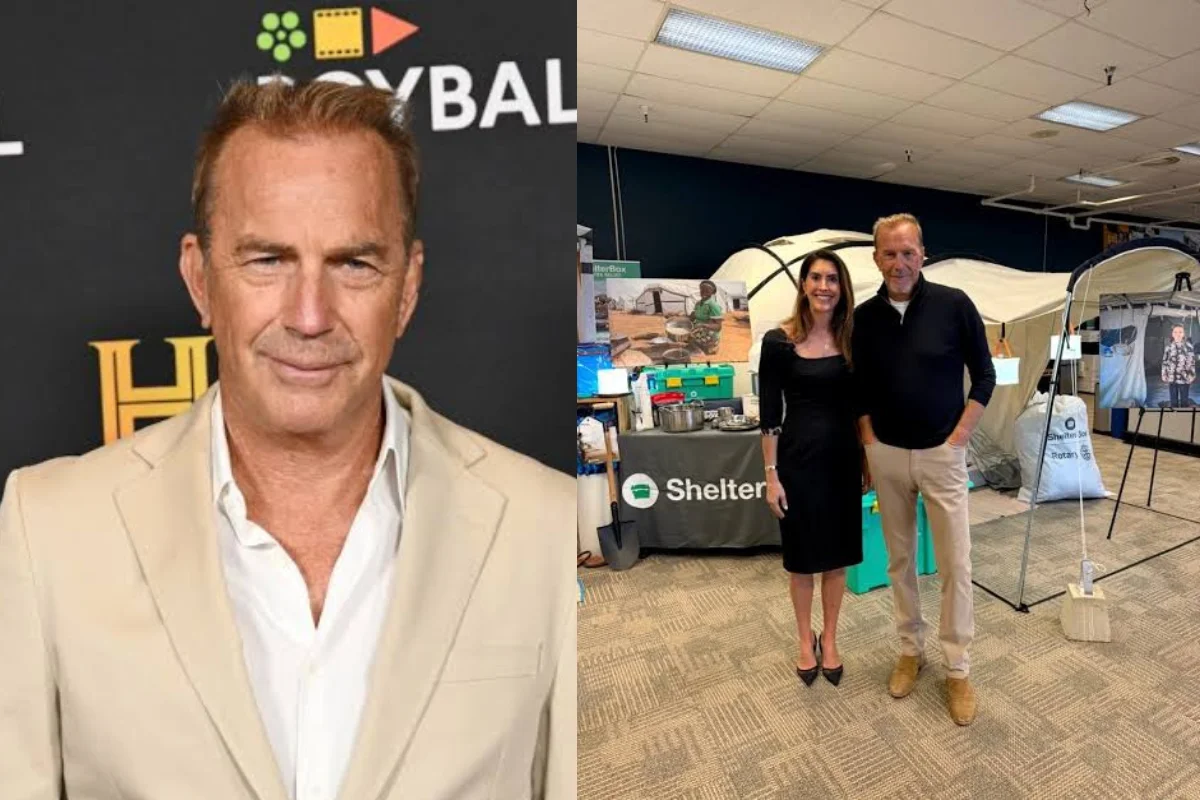
Kevin Costner made an unexpected appearance at ShelterBox USA’s annual virtual benefit on November 5, adding a familiar face to an evening focused on families who have lost their homes through conflict and disaster. According to the organisation’s announcement, the event raised more than $175,000 for emergency shelter and essential supplies. That figure belongs to the fundraiser as a whole. It was not announced as a personal donation from Costner, and the distinction is important to the story.
The benefit, called An Evening to Experience ShelterBox, brought Costner together with ShelterBox USA president Kerri Murray. A statement supplied by the charity and published by The Santa Barbara Independent on November 6 described his appearance as a surprise. It also outlined the emergencies discussed during the programme, including displacement in Gaza, support for Sudanese refugees in Chad, flooding in Nepal and the development of disaster response work in the United States.
A recognisable guest, a wider purpose
Celebrity involvement can make a charity event visible beyond its usual circle of supporters. Costner’s participation gave entertainment audiences a reason to notice a programme built around humanitarian work rather than a film premiere or an industry celebration. But the useful part of the appearance was the attention it could direct elsewhere. ShelterBox’s account placed displaced families, emergency assistance and the work of response teams at the centre of the evening.
Costner’s message, as reported in the release, asked people living in relative security to remember those facing much harder circumstances. He spoke positively about ShelterBox’s readiness to respond. There was no announcement of a new acting project or an entertainment partnership attached to that message. His contribution was described as advocacy: using a public platform to encourage concern for people who may otherwise appear only briefly in the news.
Murray thanked him for helping draw attention to families affected by disaster and conflict. The organisation also characterised him as a longtime supporter of first responders and disaster preparedness. Those descriptions explain why his appearance fitted the programme, but they should not be expanded into claims about specific missions he personally undertook. The published account identifies his role at this event as a supportive public voice, not a member of a deployment team.
What the fundraising total actually tells us
The more than $175,000 figure is ShelterBox USA’s reported total for the November 5 benefit. The announcement brought together the contributions of the evening’s supporters rather than itemising individual gifts. It did not say how much Costner donated, whether he made a financial contribution during the programme, or how much of the total could be attributed to his appearance. None of those details can reasonably be inferred from the headline number.
The distinction does not make the achievement smaller. A fundraiser is a collective effort involving donors, organisers, volunteers and the people whose experiences help explain the need. Crediting the full amount to the most famous participant would obscure that shared work. It would also turn a clear, verifiable organisational claim into a different claim that the source does not support. The accurate account is that the benefit raised the money and Costner helped spotlight its purpose.
ShelterBox said the funds would support emergency shelter and essential household supplies for families displaced by disasters and conflict. It did not publish a country-by-country allocation for this particular total. That means it would be misleading to divide the amount between the locations featured in the programme or promise a precise number of homes, tents or families assisted. The destination was described in terms of the organisation’s mission rather than a detailed spending schedule.
Four places, different emergencies
In Gaza, the programme included accounts of families dealing with prolonged conflict and repeated displacement. ShelterBox’s description focused on the human consequences of losing a secure place to live. For an audience watching remotely, those accounts offered a way to understand humanitarian assistance beyond general appeals. The organisation presented shelter as part of maintaining safety and dignity when ordinary domestic life has been severely disrupted.
The Chad section concerned Sudanese refugees who had crossed the border to escape the war in Sudan. That geography matters: the programme highlighted support in Chad for people displaced from Sudan, not an identical response described interchangeably in both countries. ShelterBox emphasised the need for emergency shelter and everyday household essentials. Its account connected those needs to the difficulties faced by families trying to find stability after leaving their homes.
Nepal appeared in the programme through the organisation’s response to severe flooding. Disaster displacement and conflict displacement have different causes, even when some immediate needs overlap. A family without a habitable home may need protection from weather, basic equipment and a secure place to rest, but assistance still has to suit the circumstances. ShelterBox used the Nepal example to show another setting in which shelter and practical supplies become urgent.
The United States portion addressed the expansion of ShelterBox’s domestic disaster response work. The release described a strengthening of its ability to assist communities after catastrophic emergencies. It did not provide a list of specific American deployments for the benefit or announce a separate domestic fundraising total. The measured description is also the most useful one: the organisation presented domestic preparedness and response as part of the same evening’s wider humanitarian conversation.
Why the everyday supplies matter
ShelterBox describes its assistance as tailored to circumstances and delivered alongside local partners. Its published examples include tents, shelter kits, blankets, solar lights and water filters. Those items should not be read as an identical package delivered to every family in every location. They illustrate the range of practical needs an emergency response may address, from protection against the elements to the ability to manage basic household routines.
That practical focus gives the benefit a clearer story than a celebrity appearance alone could provide. Losing a home means losing privacy, familiar surroundings and much of the equipment that makes daily life manageable. An appeal built around those realities can help explain why household items belong alongside shelter in humanitarian work. It also keeps the conversation grounded in what assistance is intended to do, rather than allowing the evening’s famous guest to become its only subject.
Celebrity fundraising takes many forms. Our coverage of Harrison Ford and Calista Flockhart’s forthcoming charity recognition looks at another setting where public profiles are connected to philanthropic work. The events have different organisers and purposes, but both invite the same question: does the attention surrounding well-known names help audiences understand the cause that brought them there?
Keeping the families in the frame
ShelterBox’s statement says its work has reached 3.2 million people across 100 countries. Those are the organisation’s cumulative figures, not the outcome of the November 5 event alone. The release was published as a charity-supplied announcement, so the fundraising and reach totals should remain attributed to ShelterBox. Clear attribution allows readers to distinguish the group’s report from an independently audited assessment of every number.
For Costner, this appearance was a chance to lend visibility to work that continues after a benefit ends. For ShelterBox, the reported fundraising total represents support for its emergency shelter mission. The strongest version of the story leaves both contributions in proportion: a prominent actor helped draw attention, a community of supporters raised funds, and the stated purpose remained assistance for families facing the loss of home. The surprise guest mattered, but he was not the whole evening.