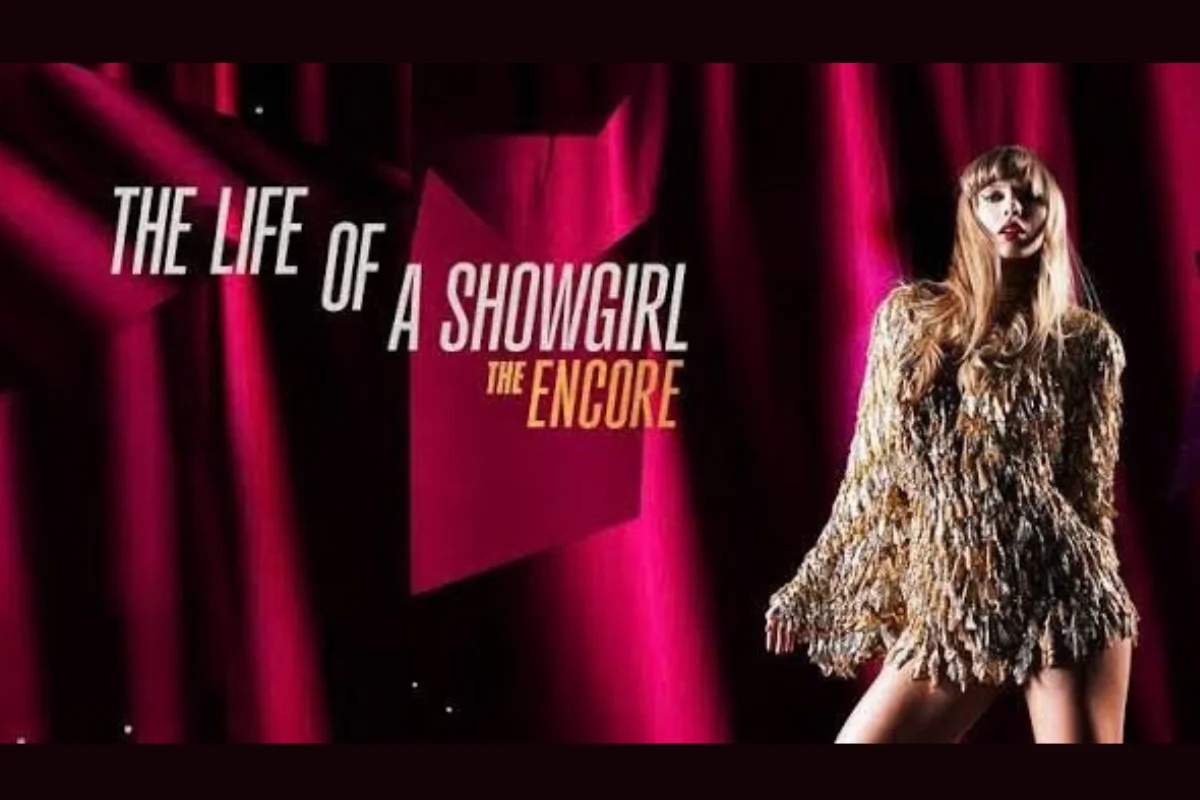
Taylor Swift’s The Encore arrives as a four-song extension of last year’s The Life of a Showgirl, offering fans another glimpse into a songwriter whose influence on modern pop is difficult to overstate. Swift’s catalog remains packed with remarkable songs, but this latest collection raises an uncomfortable question: has the relentless scale of her career begun to work against the sharpness that once made her writing so compelling?
That question becomes difficult to ignore on “Patient Zero.” The song attempts to explore the familiar territory of damaged relationships and destructive behavior, but its central idea never lands with the force of Swift’s best work. Compared with older songs such as “Dear John,” where every line seemed carefully chosen to expose a complicated emotional wound, “Patient Zero” feels noticeably less focused.
The difference is not simply age or musical style. Swift has changed dramatically as an artist, and experimentation is hardly a problem. What feels different is the sense of economy that once made even her most detailed songs hit so hard. Her strongest writing could take a very specific situation and turn it into something universally recognizable. Here, the ideas sometimes feel stretched rather than distilled.
Writing critically about Swift has also become unusually complicated. She is one of the most commercially successful artists in music history, and virtually every release arrives under enormous public attention. Discussions surrounding her career can quickly become arguments about fandom, celebrity culture, marketing or sexism rather than the music itself.
But commercial success should not make an artist immune to artistic criticism.
For much of Swift’s career, the excitement came from the feeling that there was something personal hiding beneath the enormous pop machinery. Songs such as “The Archer” carried a nervous vulnerability, while “Call It What You Want” turned an intensely public romance into something surprisingly intimate. Even when the writing was sentimental, there was usually a convincing emotional center.
Also read: Miley Cyrus Drops Her Last Name on Instagram as She Hints at a New Musical Era
The Encore rarely reaches that level.
“Cleveland!” is perhaps the clearest example. Built around Swift’s relationship with Travis Kelce, the song has the ingredients of a playful romantic track, but its lyrics repeatedly turn their attention toward people who have criticized Swift. Instead of allowing the relationship itself to occupy the center of the song, the writing seems preoccupied with proving that her detractors were wrong.
That makes the song feel oddly defensive.
There is nothing inherently wrong with writing about public criticism. Swift has spent much of her career turning media narratives and personal scrutiny into songwriting material. The difference is that her earlier work often transformed that pressure into something emotionally revealing. “Cleveland!” seems more interested in winning an argument.
“Pink Clouding,” meanwhile, comes closest to suggesting that the older Swift is still somewhere inside this era. It has a more intriguing emotional atmosphere and a bridge that gives the song a welcome sense of movement. There is also more uncertainty in the writing, which allows the listener to interpret rather than simply receive the intended message.
Still, the song occasionally reaches for easy imagery. The repeated references to different shades of pink sound clever on paper but do not necessarily add another layer of meaning. Swift has previously used color as a powerful emotional device, most famously on Red, where the colors were connected to different stages and feelings within a relationship. Here, the symbolism feels less developed.
Even so, “Pink Clouding” is probably the song most likely to reward repeated listening.
“Babylon” takes another familiar Swiftian route: a story involving ambition, success, loss and the realization that achieving a dream can carry its own price. It is territory Swift has explored beautifully before, particularly during the folklore and evermore period.
The problem is that “Babylon” lacks the specificity that made those earlier narratives so memorable.
Some of its images sound designed to resemble Swift’s established storytelling style rather than emerging naturally from a particular character or situation. The result is a song that gestures toward emotional depth without consistently earning it.
That is what makes The Encore frustrating rather than simply bad.
There are moments when Swift still demonstrates why she became such a formidable songwriter. She understands melody, emotional framing and pop structure better than almost anyone working at her level. But those strengths can also make weaker material sound more polished than it actually is.
The bigger question is why these four songs exist in the first place.
Is The Encore intended to extend the commercial life of The Life of a Showgirl? Is it aimed at keeping the album in the conversation during awards season? Is it simply another opportunity to give fans new material? There is no shortage of possible explanations.
None of them changes the listening experience.
The collection feels less like a major new chapter and more like an additional piece of an enormous machine that is already running at full speed. Swift has reached a point where almost anything she releases becomes an event. That makes the music itself harder to evaluate on its own terms.
For longtime listeners, the real disappointment may be the absence of surprise. Swift once had a remarkable ability to make each new era feel like a genuine reinvention. Even when the experiments were imperfect, there was usually a sense that she was reaching for something she had not quite done before.
The Encore feels safer.
That does not erase what came before. Swift’s songwriting legacy is already secure, built on years of songs that changed the way mainstream pop could tell personal stories. A handful of underwhelming tracks cannot undo that history.
But legacy and current form are two different things.
The Encore suggests an artist whose cultural reach continues to grow even as some of the creative urgency that once drove her songwriting appears harder to find. There are still flashes of the old precision, particularly on “Pink Clouding,” but they are surrounded by songs that feel more concerned with maintaining the Swift phenomenon than challenging it.
Taylor Swift does not need to prove that she belongs among the most important songwriters of her generation.
The more interesting question now is whether she still wants to surprise us.