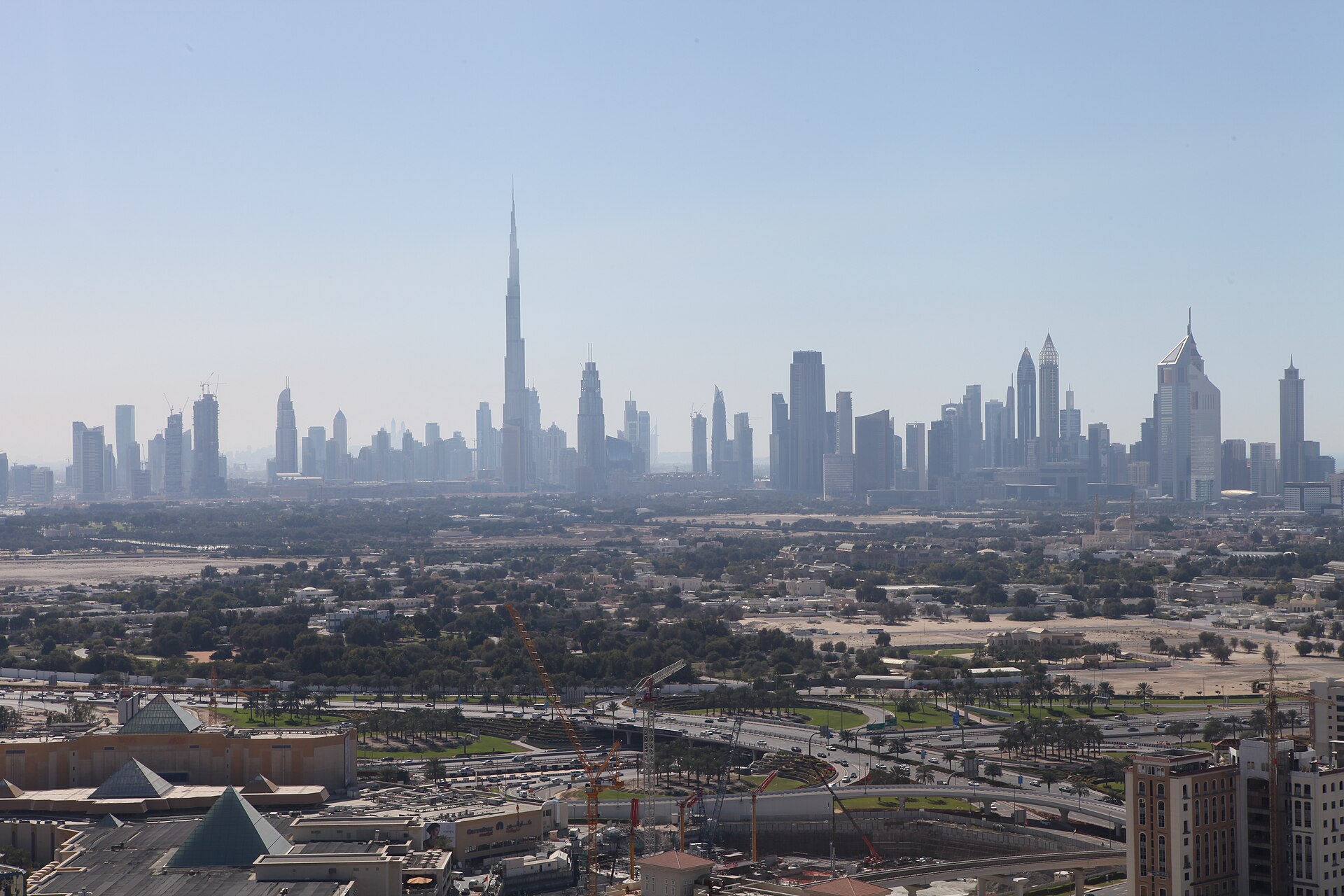
This is the first edition of Clean Air Asia, a new Global Celebrity Meter column on air pollution in Asia, and on the methods that have already cleared it.
Clean Air Asia welcomes your emails and suggestions. Write to us at admin@globalcelebritymeter.com.
Air pollution in Asia is not a seasonal inconvenience. It is a public health and economic menace, and the worst of it sits in the cities that now stand at the centre of global growth: Delhi and the National Capital Region, Lahore, Dhaka, and, when the haze season arrives, Bangkok and Jakarta. Beijing used to belong on that list. It does not belong there any more. That is the point of this column.
Why Air Pollution in Asia Is a Global Menace
WHO data show that almost all of the global population (99%) breathe air that exceeds WHO guideline limits and contains high levels of pollutants, with low- and middle-income countries facing the highest exposures. The State of Global Air 2025 report, from the Health Effects Institute and the Institute for Health Metrics and Evaluation, puts the World Health Organization annual PM2.5 guideline at 5 micrograms per cubic metre. In 2023, it attributes an estimated 7.9 million deaths worldwide to ambient and household PM2.5 and ground-level ozone, about 13% of all deaths that year, including 4.9 million from ambient PM2.5. India and China each had more than 2 million deaths attributable to air pollution in 2023. South Asia’s death rate, 191 per 100,000 people, was more than ten times the rate in high-income countries.
That burden has an address. IQAir’s World Air Quality Report 2025, covering 9,446 cities in 143 countries, regions and territories, finds that only 14% of cities met the WHO annual PM2.5 guideline, down from 17% in 2024, and that only 13 countries, regions and territories did so. Pakistan was the most polluted country, at a population-weighted annual average of 67.3 micrograms per cubic metre, followed by Bangladesh at 66.1. India stood sixth, at 48.9. Seventeen of the world’s 20 most polluted cities were in Central and South Asia.
Delhi, Lahore, Dhaka, and the Haze Belt
IQAir ranks Delhi as the world’s most polluted major city in 2025, with an annual average PM2.5 concentration of 99.6 micrograms per cubic metre, almost 20 times the WHO guideline. That is an improvement on 108.3 in 2024 and 102.16 in 2023, and it is still hazardous. IQAir names the mix: regional crop burning in Punjab and Haryana each winter, vehicles, industry, and dust from construction.
Lahore was the second most polluted major city, at 88.9, down from 102.1 in 2024, a result that helped put Pakistan at the top of the country ranking. IQAir points to seasonal crop burning in Punjab province, an ageing vehicle fleet, industrial activity, construction dust and brick kilns. Dhaka was third among major cities, at 68.0, better than 78 in 2024 and 80.2 in 2023, and still far above a safe line.
The haze belt further south is not a footnote. Jakarta’s annual average fell 18%, from 41.7 in 2024 to 34.1 in 2025, according to the same IQAir report, yet that is still almost seven times the WHO guideline. Bangkok’s capital-city reading was 17.6, more than three times the guideline, and Southeast Asia still lives with cross-border smoke from land and forest fires. Air pollution in Asia is a regional system, not a local accident.
Plastic and water belong in the same frame. UNEP, citing the Organisation for Economic Co-operation and Development, says the world generated an estimated 400 million tonnes of plastic waste in 2024, and that only about 9% of plastics are actually recycled. The OECD, as cited by UNEP, forecasts that plastic waste will nearly triple to one billion tonnes a year by 2060 if the present course holds. A share of that waste is burned or broken down into the air and the rivers that feed Asian cities.
Beijing’s Turnaround, and Seoul’s
Beijing is the proof that a megacity can change its sky. The Beijing Municipal Ecology and Environment Bureau, reporting on the municipal government portal in January 2026, says annual PM2.5 fell from 89.5 micrograms per cubic metre in 2013 to 27.0 in 2025, a drop of 69.8%. Good-air days reached 311, or 85.2% of the year, the most since monitoring began. Heavy-pollution days fell from 58 in 2013 to one in 2025. PM10, nitrogen dioxide and sulphur dioxide were also sharply lower. The city did not get there with slogans. It got there with a clean-air action plan, then a Blue Sky battle, then a one-microgram campaign, then a 0.1-microgram campaign: coal taken out of heating, older vehicles retired, new-energy cars pushed into the fleet (more than 60% of new cars in 2025, with a new-energy stock above 1.28 million), construction dust sealed and watched, and regional action with neighbouring provinces.
Seoul tells the same story at a different scale. The Seoul Metropolitan Government says annual PM2.5 fell from 30 micrograms per cubic metre in 2006 to 18 in 2025, a drop of about 40%. Good days rose from 73 to 182. Bad days fell from 108 to 32. The city converted its diesel buses to compressed natural gas, then began electrifying the fleet (about 23% of city buses were electric by the end of 2025). It completed low-emission measures for about 530,000 older diesel vehicles, restricted the dirtiest engines in winter, and cleaned up boilers, industry and construction sites. Air pollution in Asia is not a mystery. It is a management problem, and two capitals have already managed it.
What Actually Works
The playbook is visible. It has five parts, and each one is already in use.
- Clean the fleet and the fuel. Electric and other new-energy vehicles, cleaner buses, and the retirement of high-emitting diesel engines cut the daily load in dense cities. Beijing and Seoul both moved the fleet first, because vehicles run every hour, in every street.
- Stop burning the harvest in the open. Winter smog over Delhi, the NCR and Lahore is fed by crop-residue fires. The alternative is already known to farm departments: machines that sow the next crop into the residue, collection for biogas and biomass energy, and enforcement that makes open burning the expensive choice rather than the easy one.
- Retire dirty coal and dirty industry. Beijing’s sulphur dioxide is now at a single-digit reading, which the city itself has described as the near-elimination of coal pollution. Power, brick kilns and factories have to meet a standard, or close.
- Control construction dust, and grow the green belt. Sealed sites, washed wheels, watched roads and urban tree belts are unglamorous. They are also how a city stops building itself into a dust cloud.
- Measure everything, and act across borders. Public monitors, open AQI, and satellite fire alerts make the problem visible in real time. Haze does not carry a passport. The ASEAN Agreement on Transboundary Haze Pollution has been in force since 2003. In September 2025, ASEAN ministers restated a haze-free goal for 2030 and backed a coordinating centre in Indonesia. As of 3 November 2026, Singapore’s Ministry of Foreign Affairs said that centre still needed at least six ratifications to start, and that Singapore would file its own. Singapore already hosts the ASEAN Specialised Meteorological Centre, which tracks fires and smoke for the region. Agreements work when they are staffed, funded and used.
What Celebrities and Business Leaders Can Do
Fame and capital move behaviour faster than a government circular. The people who fill stadiums, boardrooms and front pages can treat clean air as a standard, not a charity add-on. Touring acts can put shows on cleaner power and refuse to treat a smog skyline as a backdrop. Owners of factories, funds, property and fleets can clean their own exhaust first: vehicles, sites, kilns, power purchase, and the farms in their supply chain. The fortunes that built today’s billionaire class, which we have already mapped in our report on how today’s top billionaires made their wealth, now have a second test: what those fortunes do to the air in the cities that made them rich.
Culture can lead as well as follow. Music already has a planetary stage in The Global Concert world tour, Let’s Do It for the Planet. Clean Air Asia will keep that standard in view, and it will name the cities, companies and public figures who raise it.
The verdict is not complicated. Air pollution in Asia is a menace with a known cause list and a known cure. Delhi, Lahore and Dhaka do not need a new theory. They need the discipline Beijing and Seoul have already shown, applied through a full winter, then a full decade. This column will be here for that decade.
Reader Survey: Tell Clean Air Asia What to Fix First
Clean Air Asia welcomes your emails and suggestions. Write to us at admin@globalcelebritymeter.com.
Vote below, and send us your fix. The best reader suggestions will run in the next edition of Clean Air Asia.
FAQ
Which Asian cities have the worst air pollution?
IQAir’s World Air Quality Report 2025 ranks Delhi as the world’s most polluted major city, at 99.6 micrograms per cubic metre of PM2.5, with Lahore second at 88.9 and Dhaka third at 68.0. Jakarta stood at 34.1 and Bangkok at 17.6, still well above the WHO guideline.
How serious is air pollution in Asia against the WHO guideline?
The State of Global Air 2025 report puts the WHO annual PM2.5 guideline at 5 micrograms per cubic metre. Delhi’s 2025 average was almost 20 times that level. IQAir found that only 14% of cities worldwide met the guideline in 2025, and that 17 of the 20 most polluted cities were in Central and South Asia.
Did Beijing really clean its air?
Yes. Official figures from the Beijing Municipal Ecology and Environment Bureau show annual PM2.5 falling from 89.5 micrograms per cubic metre in 2013 to 27.0 in 2025, a 69.8% drop, with heavy-pollution days cut from 58 to one.
What actually works to stop air pollution in Asia?
The record from Beijing and Seoul is consistent: cleaner vehicles and fuels, an end to open crop burning, tighter rules on coal and industry, construction-dust control and green belts, plus continuous monitoring and cross-border haze agreements that are actually enforced.
How can readers take part in Clean Air Asia?
Clean Air Asia welcomes your emails and suggestions. Write to us at admin@globalcelebritymeter.com, and use the survey on this page. The best reader suggestions will run in the next edition.