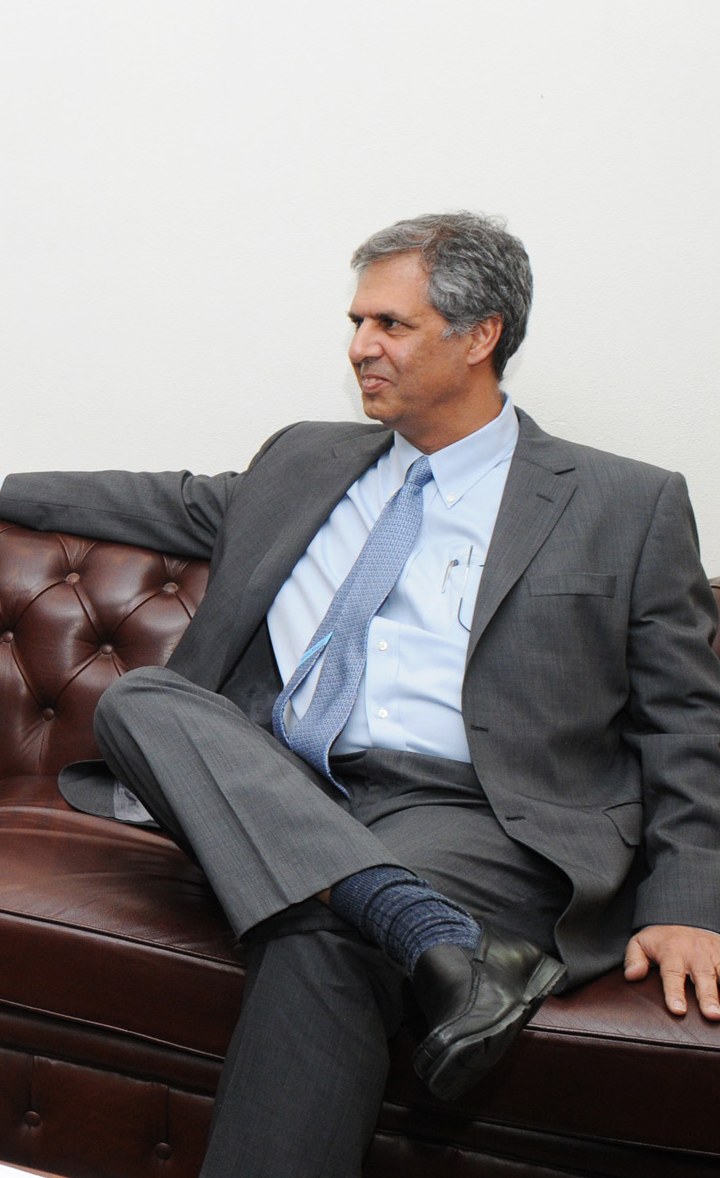
In an age of loud fortunes, Noel Naval Tata has made a career of staying out of the frame. He built a retailer from a single store, grew a trading house into a multi-billion-dollar business, and on 11 October 2024 took the seat that sits above India’s best-known industrial group: chairman of the Tata Trusts. The trustees appointed him unanimously, a week after the death of his half-brother, Ratan Tata. His first words were not a victory speech. “I am deeply honoured and humbled by the responsibility that has been cast on me by my fellow Trustees,” he said, in a statement issued by the Trusts.
That humility is not a personal quirk. It is the Tata way. For more than a century the House of Tata has treated enterprise as a public trust, philanthropy as ownership, and nation-building as the point of the work. This is the story of those values, of the quiet industrialist now asked to carry them, of the goals he shared with Ratan Tata, and of why the world still needs the Tatas.
The values that built a house
On its community page, the Tata group attributes to the founder, Jamsetji Tata, a sentence that has become the house’s north star: “In a free enterprise, the community is not just another stakeholder in business, but is in fact the very purpose of its existence.”
That idea took a form almost unique in global capitalism. The group says that 66 percent of Tata Sons’ equity is held by the Tata Trusts, and that dividends flow directly into the Trusts’ philanthropic work. Ownership itself is philanthropy. The majority shareholder is a charity, and the hospitals, universities and research it funds are what the fortune is for.
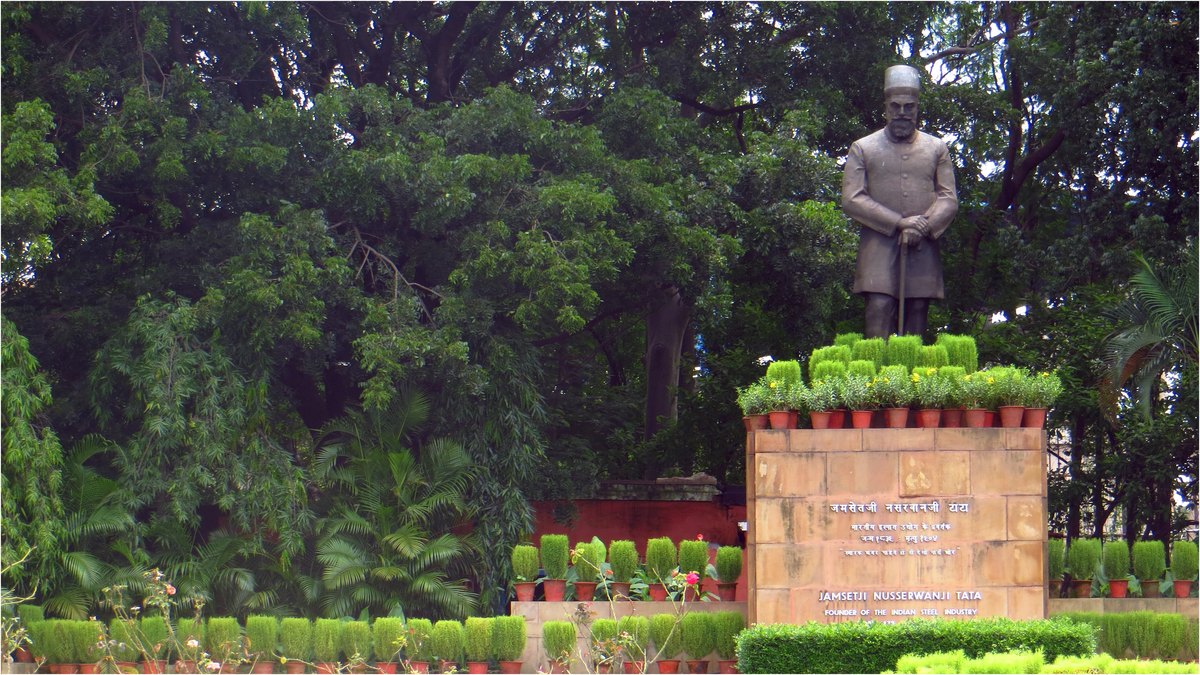
The Trusts describe themselves as India’s oldest philanthropic organisation, with a history that begins in 1892, when Jamsetji established the J. N. Tata Endowment for higher education. From that seed, the Trusts and the Tata group record, came institutions that still shape Indian life: the Indian Institute of Science in Bengaluru, which grew from Jamsetji’s vision and began admitting students in 1911; the Tata Institute of Social Sciences, founded in 1936; and Tata Memorial Hospital, commissioned by the Sir Dorabji Tata Trust in 1941. The Trusts today work across health, nutrition, education, water and livelihoods.
Integrity sits beside trusteeship. J. R. D. Tata, who chaired the group for more than half a century, put the duty in plain language, in words still published by the Tata Sustainability Group: “The wealth gathered by Jamsetji Tata and his sons in half a century of industrial pioneering formed but a minute fraction of the amount by which they enriched the nation. The whole of that wealth is held in trust for the people and used exclusively for their benefit. The cycle is thus complete. What came from the people has gone back to the people many times over.”
Nation-building was never a slogan. Steel, power, aviation, hospitality, tea, automobiles and information technology were all, in the Tata telling, acts of building a country as much as building a company. In a December 2004 statement still carried by the Tata Trusts, Ratan Tata made the duty personal: “India is still a developing country, one burdened with enormous inequalities. It is our duty to play whatever role we can, in whichever way we can, to diminish those disparities. This is the guiding principle of all of us at Tata. We are not in it for propaganda or visibility. Rather, we are in it for the satisfaction gained from knowing that we have achieved something meaningful, that we have put our shoulder to the wheel of nation building, that we are serving the country that provides us sustenance. The Tata ethos demands no less.”
A career built in the quiet
Noel Tata was born on 12 November 1956 to Naval H. Tata and Simone N. Tata, The Times of India reported. He studied at the University of Sussex and later completed the International Executive Programme at INSEAD, according to the Tata group’s official profile. His working life began at Nestlé in the United Kingdom, Tata International has said, before he returned to India and to the group that already bore his name.
The official profile records an association with the Tata group of more than 40 years. The work that made his reputation was retail, done slowly. As managing director of Trent for more than 11 years, he oversaw its growth “from a one store operation in 1998 to over 800 stores across formats today,” the profile says. He became chairman of Trent in 2014, a role he still holds. The Times of India, writing at his appointment in October 2024, noted that under him Trent pioneered a private-label model in Indian retail, with almost all products at Westside sold under the store’s own brand, and that the chain had grown to more than 850 stores.
His last executive assignment, the profile says, was as managing director of Tata International, the group’s trading and distribution arm, from August 2010 to November 2021. In that decade he grew the company “from a turnover of USD 500 mn to over USD 3 bn.” He now chairs Tata International, Voltas and Tata Investment Corporation, and is vice chairman of Tata Steel and Titan Company, alongside the Trusts.
The style has always been low-key. The Times of India described a man who, until his appointment, had been the less publicly known of the two Tata half-brothers: rarely seen in a suit and preferring to remain behind the scenes. The same report said he shared with Ratan Tata “humility, a grounded approach, and a focus on people.” That reserve sets him apart from many of the public-facing names in our list of the hottest business tycoons of 2026.
What he shared with Ratan Tata
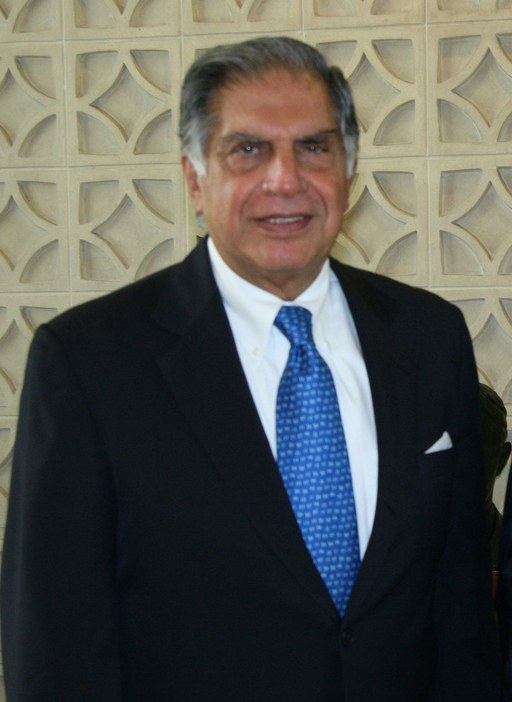
They were half-brothers, sons of Naval Tata, and they were not always a public pair. The Times of India noted that they were rarely seen together, even as their relationship was described as cordial. What they clearly shared was a view of what the Tata name is for: community, continuity, and a model of business as national service.
When the trustees met in Mumbai on 11 October 2024, they first condoled Ratan Tata’s death and “recalled his yeoman services not only to the Tata Group but also to nation building,” the Trusts said. Then they turned to succession. “I look forward to carrying on the legacy of Mr. Ratan N. Tata and the Founders of the Tata Group,” Noel Tata said. “Founded more than a century ago, the Tata Trusts are a unique vehicle for undertaking social good. On this solemn occasion, we rededicate ourselves to carrying on our developmental and philanthropic initiatives and continuing to play our part in nation building.”
That is continuity in the Tata sense: not the preservation of a private empire, but the carrying forward of a public duty. Ratan Tata had already described the work as being “not in it for propaganda or visibility.” Noel Tata, the less visible brother, was in many ways the natural custodian of that sentence.
In a September 2026 statement, the Tata Trusts reported that he described the group as having been “conceived as a national service carried on through business” and said that what makes the operating structure unique “is that it is premised on trust and its majority shareholder is a charity.” That charity, he said, “funds hospitals, universities, and research from the dividends it receives. It exists for public purpose and for nation building.” He added: “That is not sentiment. It is the operating model of this House, and it has stood the test of time for more than a century.” The Trusts have said they want that century-old ownership structure preserved, and have asked Tata Sons to look at every available option with the long-term public interest in mind.
Why the world needs the Tatas
The world is not short of large companies, or of large fortunes. What it is short of is a proven idea: that a commercial group of global scale can be owned, in the majority, by a charity, and can still compete, still invent, still employ, and still put its dividends to work in hospitals and lecture halls. The Tata model is that idea, lived for more than a hundred years.
It matters far beyond Mumbai. Tata companies reach into steel, cars, software, salt, tea, hotels, aviation and energy, and they touch customers on several continents. The group’s community page notes a family of more than 700,000 employees. In an era when many fortunes are assembled in a decade and many institutions are built to be sold, the Tata habit is the opposite: build for the country, hold in trust, think in generations. Readers who follow how great fortunes are usually made will recognise how unusual this path is; see our report on how billionaires made their wealth.
Integrity is hard to practise when a short-term gain is on the table. When Noel Tata said the structure has allowed Tata Sons “to act repeatedly in ways that a purely commercial calculus would not have supported,” he was describing a freedom that only trusteeship can buy: the freedom to do the right thing when the spreadsheet would not.
And the world needs India to have institutions that outlast any one life. Ratan Tata is gone. The Trusts, the companies, the hospitals and the universities remain. Asia’s industrial families have long stood in the continent’s public life, as we note in our Asia Power List for 2026. The Tata difference is that the family’s greatest asset is not a bloc of personal shares. It is a set of values, and a legal structure that tries to make those values last.
Noel Tata is not a showman, and he has never pretended to be one. He is a retailer and a trader who grew businesses patiently, and now the chairman of a unique philanthropic engine. The humble industrialist is, in the Tata tradition, exactly the sort of person the work requires. The world does not need another loud fortune. It needs houses that still believe the community is the purpose of the enterprise, and leaders quiet enough to keep that promise.
FAQ
Who is Noel Tata? Chairman of the Tata Trusts since 11 October 2024, a long-time Tata group leader at Trent and Tata International, and the half-brother of the late Ratan Tata, according to the Tata group and the Trusts.
What did he share with Ratan Tata? Community, continuity and the Tata model of business as national service, a duty he pledged to carry on when he was appointed chairman of the Trusts.
Want your brand featured? Partner with GCM.