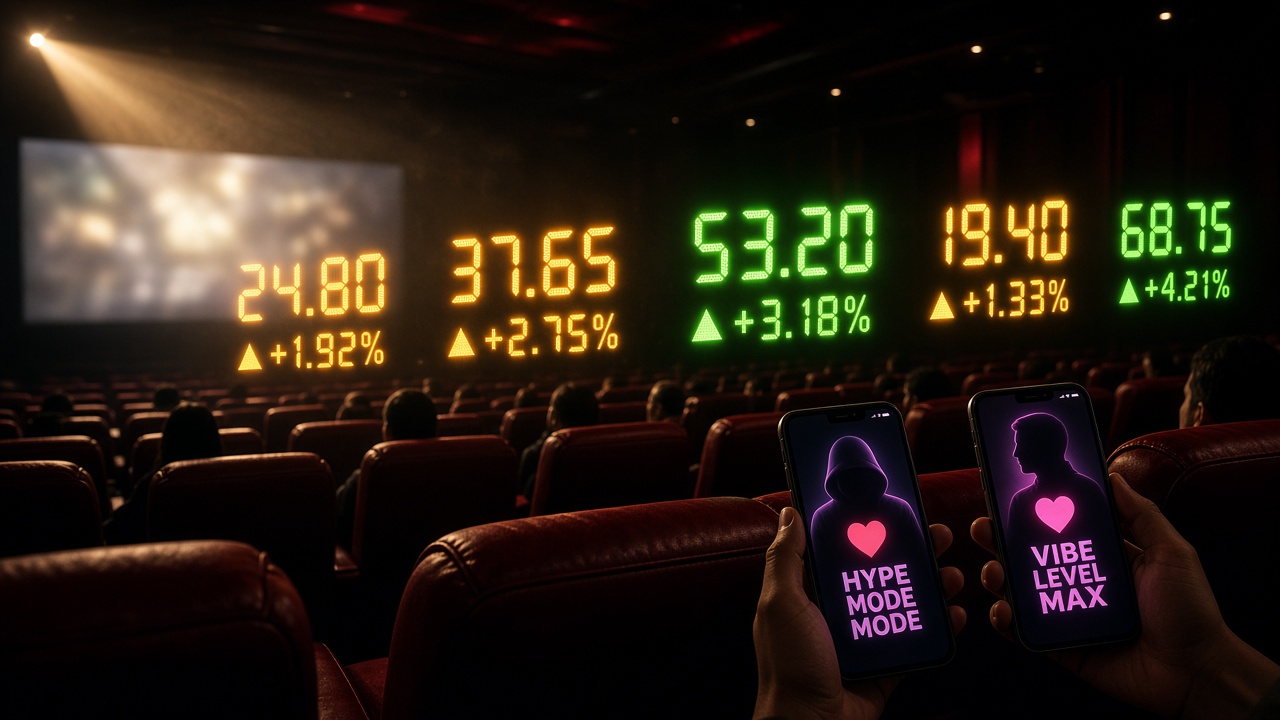
The Third Eye is open, and the first thing it sees is a lie with a ticket stub.
Walk into a Delhi-NCR or Mumbai multiplex for one recent big Indian release and the booking app has already performed the miracle: sold out, filling fast, housefull by lunch. The morning collection poster is doing overtime. Then the lights drop and you can count the heads on one slow pan. Hollywood Movietimes has already walked those aisles in 18 Seats in the Afternoon, 30 at Night. This column is about the machine behind the empty chairs — the corporate booking, portal and creator nexus that can turn a soft opening into a screaming hit. This is the new Ramayan: an epic of manufactured glory, told in tickets nobody sat in.
The poster said housefull. The hall said otherwise
India’s box-office war is no longer just a Friday night. It is a 24-hour content drop. Official collection graphics land every morning like scripture. Trade desks publish a quieter number. The gap is the story, and the story is the brand. Exhibitors have started sending “cinema inspectors” into midnight shows that ticketing platforms marked full, The Hollywood Reporter India reported, only to find auditoriums almost empty. Trade voices told the same outlet a simple tell: the 8:00 a.m. show looks packed, the 8:30 a.m. show in the same complex looks abandoned.
That is the whole trick in one frame. The till can be paid. The seats do not have to be. Once a film is accused of “inorganic” collections, insiders described a routine pump: a reported ₹50 crore opening in which the public may have paid ₹40 crore, with the rest fed in by the producer. About half of that feed can return as distributor share. The rest sits with the cinema and gets booked as marketing. The meter still climbs. The hall still yawns.
How the nexus works
This is not chaos. It is a stack. Four layers, one vibe, one number the internet is supposed to believe.
Step 1 — The bulk buy
Call it corporate booking, block booking or a “company outing” that never clocked in. Trade critic Komal Nahta has described a formal agent network, sanctioned by makers, that books and “distributes” bulk tickets on commission. The Hollywood Reporter India reported the same playbook in 2025: fan-club drops scattered across a weekend, free seats handed to housing societies, schools and offices, or tickets simply left empty after they have already been paid for. Trade expert Atul Mohan, quoted by Hindustan Times, laid out the brand-swap version: a star who endorses a company asks that brand to buy thousands of tickets, in exchange for a trimmed fee or a free ad shoot. The sale is real enough to hit the system. The audience is optional.
Step 2 — The portal signal
Ticketing apps are the billboard. Book a few thousand seats and a title can start trending on the platform. Grey seats. Housefull tags. “Selling fast.” Producer G. Dhananjayan, speaking to Cinema Strategist about the same practice reaching Tamil cinema, put a number on the optics: book around 4,000 tickets for a show and the app starts performing for you. Trade analyst Amod Mehra told NDTV that large blocks can later be cancelled, so the interface still looks busy while the aisle is a ghost town. An abnormal last-minute surge after weak tracking, or a tiny back-street screen on fire while a flagship multiplex stays cold, is the other red flag exhibitors now watch for.
Step 3 — The creator chorus
While the seats are being painted full, the timeline is being painted loud. Influencers with rate cards. Premiere-night rapture videos. Reviews that sound like they were typed in the same WhatsApp group, posted in the same hour, sometimes before the first show has even exhaled. Al Jazeera reported in 2025 that paid reviews are an open secret in the business, with PR rate cards circulating for portals, trade voices and creators. France 24, later that year, heard the same charge about both reviews and ticket sales: everything, one insider said, is bought and manipulated. The applause arrives on your phone first, so you will buy the ticket second. Celebrityfees maps the other side of that economy in Manufactured Hype vs. Real Demand — what the market pays for when the ovation is a line item.
Step 4 — The poster war
Then the official graphic drops, and the trade number follows, and the internet is invited to pick a religion. Insiders told The Hollywood Reporter India that once a producer starts feeding the box office, the feed usually has to continue for about a week so the curve looks “organic.” A film that actually connects can take over and the pumping fades. A film that does not usually stops after the first weekend. The prize is not the empty seat. The prize is perception: the next fee, the next OTT bid, the next membership in a crore club that exists because somebody bought the tickets.
| Layer | What you are shown | What is actually moving |
|---|---|---|
| Corporate / block booking | Shows filling, “sold out” boards | Bulk buys by brands, producers, agents or fan drops |
| Ticketing portals | Trending titles, housefull maps | Volume booked, sometimes later cancelled |
| Paid creators | Wall-to-wall raves, “blockbuster” talk | Rate-card reviews and coordinated posts |
| Official posters | Record openings, crore-club graphics | A gap with trade-tracked figures |
One recent release, and a saga around it
The Third Eye is not pinning a courtroom verdict on a single title. It is reading a pattern that public reporting has been stacking since 2025, and that one recent big release walked straight into.
In early 2025, Komal Nahta accused the makers of Sky Force of heavy first-week block booking of unsold tickets, among the largest he had seen in recent Hindi cinema, with housefull or near-housefull status on BookMyShow lining up against near-empty halls, as reported by NDTV and Hindustan Times. The same season, Hindustan Times reported similar allegations around Chhaava, from the same production house, Maddock Films. Game Changer’s makers, that report said, put a worldwide premiere figure at ₹186 crore; number trackers Sacnilk and Box Office India had it closer to ₹80 crore.
By mid-2026 the beat had not died. After first-day shows of Alpha, the Alia Bhatt and Sharvari starrer, Business Today reported viewers claiming corporate bookings, thin houses and a strange split: cheaper tickets sitting cold while the premium band looked booked. The 2025 comedy-horror Thamma became another number war. Producer-distributor Wadhwa told AFP the true take was around $15 million against a reported $18 million; director Aditya Sarpotdar stood by the higher figure and said producer numbers are the honest ones. Both versions cannot be the same movie.
Sunny Deol, speaking to Zoom and quoted in Hindustan Times, called the trend sad and was blunt with the next generation: this is not how you make yourself a hit. In the south, Dhananjayan described first-day star buys running into crores, a recovery of roughly 40 percent, and a manufactured ticket into the ₹100-crore club. Producers Guild of India president Shibasish Sarkar has called the perception game a fraud against the masses. This is not one film having a weird Saturday. This is a serial. That is why we are calling it the new Ramayan.
How to spot a fake collection
You do not need a trade desk. You need a ticket, a pair of eyes and a little Third Eye attitude.
- The app versus the aisle. If the platform says housefull and you can still pick a row, believe the row.
- The time-slot glitch. A packed 8:00 a.m. and a deserted 8:30 a.m. in the same complex is a classic block-booking tell.
- The weird cinema. A quiet flagship multiplex and a tiny hall in a back colony inexplicably on fire.
- The price-band split. Cheap seats unsold, the premium band magically gone, the pattern viewers flagged around Alpha.
- The overnight surge. Advance sales that jump after a week of weak tracking.
- The poster versus the trade. Official morning graphic one number, Sacnilk or Box Office India another.
- The identical recap. Twenty creators, one vocabulary, posted in the same hour.
- The midweek ghost. Weekend “records,” and a Wednesday hall you could picnic in.
- The free-ticket trail. Bulk handouts to societies, offices and “fan” distributors outside the gate.
- The perfectly shaped week. A collection curve that stays oddly smooth, as if someone is still feeding the meter.
Why the nexus wants you to believe
Inflated openings juice the next quote. A bought Friday becomes a bigger payday, a louder sequel pitch, a fatter streaming bid. We have already priced that hunger in our look at Hollywood’s highest-paid actors and per-film earnings in 2026 and in what it takes to be a mega star. Real demand still has a cleaner scoreboard. Hollywood Movietimes keeps that ledger in its Ebenezer box-office preview and in Hollywood’s Top 10 movies of 2026. For the industry’s actual engine, not its makeup, read our file on why Hollywood remains the top movie industry in the world.
On Celebrityfees, the honest rate card still matters more than a bought opening. If you are booking talent, start at the Celebrityfees enquiry desk, check the Fee Meter, and read the official Richiegaps card. Then sit with the quieter practice: Everyday Vitality by Richiegaps, and the daily philosophy on MotivationsMasters, Nothing Is 100. Hits that last are built on pulse, not on empty seats.
The Third Eye will keep watching the nexuses. The collections can be printed. The hall cannot be photoshopped.
FAQ
What is The Third Eye on Global Celebrity Meter?
The Third Eye is GCM’s recurring investigative column on the hidden machinery behind celebrity and entertainment numbers, opening here with the corporate booking, portal and creator nexus around fake box office collections in India.
What is corporate booking in the Indian box office?
Corporate or block booking is the practice of brands, producers, stars or commissioned agents buying tickets in bulk so a film looks housefull and the reported collection climbs, even when many of those seats stay empty.
How do ticketing portals make a film look sold out?
Large advance blocks can trend a title, grey out seats and flash housefull tags. Trade voices have described packed early slots beside empty later ones, and bookings that are later cancelled after the sold-out signal has already done its job.
How can viewers spot inflated collections?
Compare the app with the actual aisle, watch for odd time-slot splits and price-band gaps, read official posters against trade-tracked figures, and be wary of identical influencer raves dropping in the same hour.
Why do producers and stars inflate box office numbers?
Perception. A louder opening can support the next fee, the next deal and a place in a crore club, which is why this nexus now reads like a new Ramayan — an epic of glory that has to be looked at with a third eye.