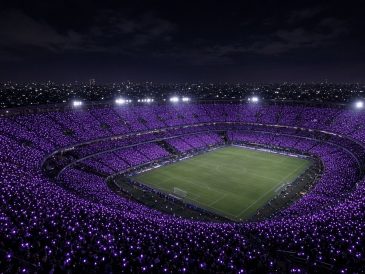
Talent, champions, timing, a cascade — and luck. The airport books will sell you a formula. The evidence will not.
Everyone wants the cheat code. A morning routine, a posting cadence, a single “storytelling framework” that turns a talented person into a global name. The books in the airport will sell you five habits. The internet will sell you ten. The evidence is ruder than that: mega stardom is real, measurable and wildly uneven, and there is no tidy recipe that guarantees it.
That is not a reason to romanticise luck and give up. It is a reason to look at what actually recurs when a career leaves the mid-tier and becomes a climate system of its own.
Talent is required. It is not the whole plot.
In his 2024 book How to Become Famous, the Harvard legal scholar Cass Sunstein spent a career’s worth of case studies — from the Beatles and Bob Dylan to Taylor Swift, Beyoncé and even the Mona Lisa — trying to isolate what separates the names everybody knows from the ones that fade. His conclusion, as he told NPR and the Harvard Gazette, is that there is no unifying character sheet. Diligence, talent, an unhappy childhood, a grand ambition: plenty of people who never became famous have those too.
What does show up, again and again, is a cluster of conditions. Ability has to be there. So does stamina. So does a champion — a network of people who decide you are worth backing, and then keep backing you long enough for the rest of the room to catch on. And then, if you are very fortunate, a cascade: enthusiasm that starts in one circle and tips into the next until the name feels inevitable.
There is no 10-step routine for becoming a mega star. There are conditions. Only some of them can be willed.
Sunstein’s warning is useful precisely because it is unfashionable. The self-help industry needs a formula. Mega stardom is closer to weather: you can prepare for it, you can be in the right place with the right work, and you still cannot command the front.
The cascade is now a stadium
When the cascade does arrive, the numbers stop looking like show business and start looking like infrastructure. Taylor Swift’s Eras Tour, Pollstar told the Associated Press, grossed an estimated $2.2 billion by the time it ended — a figure that shattered the tour’s own record and reset what a single live run can be worth. That is not only songwriting. It is a fan culture organised enough to move cities, a catalogue deep enough to fill a night, and a performer who has spent two decades turning attention into a relationship.
The same logic, at a different scale, is why booking markets now treat a handful of names as events rather than acts. Celebrityfees’ ranking of the highest-grossing concert tours of all time is a ledger of cascades that held. So is the quieter question of what it actually costs to book an A-lister for a private show: once a name can move a room by walking into it, the fee stops being a performance rate and becomes a scarcity tax.
Platform, timing and the people who say yes
Mega stardom has always needed a platform — a radio format, a studio system, a television network. The new ones are faster and less polite. A TikTok audio, a Weverse post, a live viewing that cracks a box-office chart can do, in a weekend, some of the work a publicity department used to do over a quarter. GCM has already mapped one version of that acceleration in our look at how to become a global star and attract sponsors. The platform does not invent talent. It decides how widely a moment can travel, and how quickly a champion can be found.
Timing still has a veto. Arrive with the right sound in the wrong year and you are a footnote. Arrive when a culture is already leaning toward you — as K-pop acts have, on a wave of film, fashion and fandom infrastructure — and the same work can become a global export. That is not a slight. It is a reminder that mega stardom is a meeting, not a monologue.
Ownership is the plot twist
The stars who stay mega, rather than simply getting famous, tend to convert the cascade into something they own. A master recording. A beauty line. A live business that does not depend on a single radio cycle. We have set out how the market prices that conversion in celebrity brand value explained, and Limited Editions Europe has followed the moment fame turns into equity.
Looks, voice and body can be part of that asset — which is why the next fights in the industry are about insuring and licensing them, a shift we examine in our report on face, eyes and body insurance, and why Celebrityfees is tracking how stars now protect their looks and voices in the AI age. A mega star is not only watched. They are, increasingly, a portfolio.
Luxury already understood the face as a commercial engine: our partners at Limited Editions Europe have asked why women in luxury ads still make the till ring. The mega star is that logic at stadium volume.
Stamina, and the hunger that outlasts the hit
There is a less glamorous condition, and it is the one most advice columns accidentally get right. The people who remain in the weather system work past the point where a reasonable career would have eased off. MotivationsMasters has looked at the motivation that outlasts money, fame and the perfect romance, and at stars who started with little and later became very rich. The pattern is not mystique. It is repetition, recovery and a refusal to treat a peak as a conclusion.
That is also why the hottest names on a given year’s ranking, or the highest film paydays in Hollywood, can shift without the underlying machinery changing. A mega star is not only the person who is loudest this month. They are the person whose cascade still has somewhere to go.
So what does it take?
A serious talent, practised until it is unmistakable. At least one champion who can open a door and keep it open. A platform that can carry a moment beyond its first room. Timing that you can prepare for but not schedule. The conversion of attention into a business you actually control. And luck — the part no morning routine will sell you, and the part Sunstein keeps putting back on the table.
If that list feels unsatisfying, it should. Mega stardom is not fair, and it is not a homework assignment. The useful ambition is not to photocopy someone else’s origin story. It is to be ready, with work that can survive a cascade, if and when one finally starts.