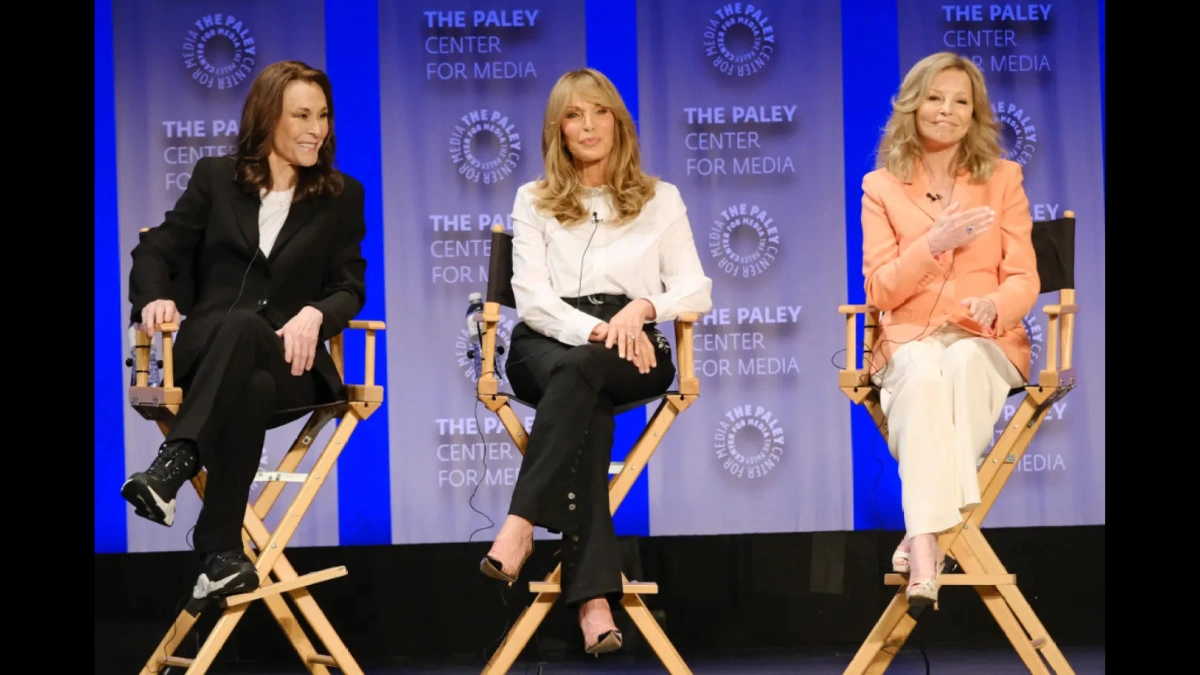
The iconic stars of Charlie’s Angels came together for a nostalgic yet deeply personal reunion, sharing behind-the-scenes stories, challenges, and triumphs during a special 50th anniversary panel at PaleyFest in Los Angeles.
Actresses Cheryl Ladd, Jaclyn Smith, and Kate Jackson reflected on their time starring in the groundbreaking show, which redefined how women were portrayed on television. The trio discussed everything from creative clashes and casting shake-ups to personal health battles and the cultural impact of the series.
Cheryl Ladd recalled a particularly bold moment when she pushed back against the show’s wardrobe expectations. She humorously shared how producer Aaron Spelling frequently insisted on her wearing bikinis on-screen. Frustrated with the repeated requests, Ladd decided to make a statement by purchasing an extremely revealing swimsuit that she knew would not pass network standards. While the move earned her the label of a “troublemaker,” it ultimately helped her gain more control over her on-screen image.
Jaclyn Smith added that despite such tensions, the show’s popularity continued to grow, proving that audiences were drawn to more than just appearances. Instead, the series resonated because it presented women as strong, independent figures who took charge of their own destinies.
Smith emphasized how revolutionary the show was for its time. Unlike traditional portrayals where women often needed rescuing, Charlie’s Angels flipped the narrative by showcasing three women solving crimes and facing danger head-on. “It gave women permission to be independent,” she noted, highlighting the show’s lasting influence on female representation in media.
The discussion also took a serious turn when Ladd revealed, for the first time publicly, that she had recently battled breast cancer. She described her diagnosis as aggressive and emotionally challenging but credited her doctors, family, and resilience for helping her through recovery.
Her co-stars shared similar experiences, as both Smith and Jackson have also faced breast cancer in the past. Smith spoke about the importance of emotional support, recalling how she sent Ladd wigs during chemotherapy as a gesture of solidarity. Jackson, meanwhile, stressed the importance of early detection, encouraging women not to fear screenings like mammograms.
The panel also revisited the origins of the show. Kate Jackson explained how the concept evolved from an earlier rejected idea titled “Alley Cats.” Unsatisfied with that concept, she collaborated with Aaron Spelling to develop a fresh idea that would eventually become Charlie’s Angels. Even the show’s name was inspired by a painting in Spelling’s office, while the now-iconic speaker device used by Charlie came from a simple office intercom.
The actresses fondly remembered working alongside Farrah Fawcett, whose role as Jill Munroe made her a global sensation. However, her departure after the first season created both emotional and professional challenges for the cast. Ladd eventually joined the series as Kris Munroe, Jill’s younger sister, a creative decision that helped maintain continuity.
Beyond the screen, Charlie’s Angels became a massive cultural phenomenon, generating significant merchandising revenue. However, Jackson revealed that she received very little financial benefit from those ventures, highlighting the often-overlooked realities of television contracts from that era.
The stars also spoke about missed opportunities due to their commitments to the show. Jackson had to step away from the film Kramer vs. Kramer, while Smith turned down a chance to appear in a James Bond movie. Despite these sacrifices, they expressed gratitude for being part of a series that left such a lasting legacy.
Looking ahead, the actresses are embracing new chapters in their lives. Smith is preparing to release a memoir, while Ladd continues to appear in television films. Jackson, who stepped away from acting to focus on family, revealed she is now ready to return to the industry.
As fans celebrated five decades of Charlie’s Angels, the reunion served as a powerful reminder of the show’s impact—not just as entertainment, but as a cultural milestone that helped redefine women’s roles on screen and beyond.