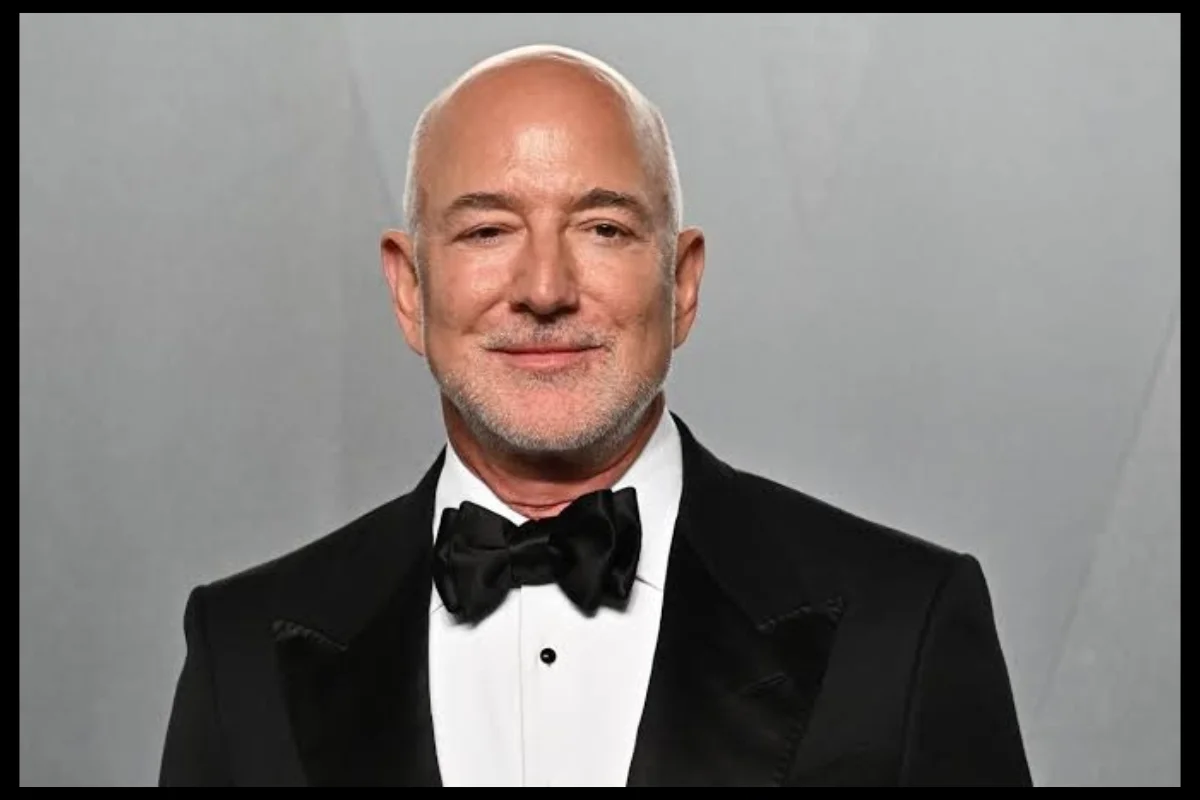
Jeff Bezos started as a 30-year-old who walked out of a good job, and the $368 billion Bloomberg reading of 18 November 2026 is what those choices compounded into, not a personality type you can copy-paste.
Everybody wants the houses. Fewer people want the part that actually transfers: a decision rule you can use when the safe path is already winning. In his 30 May 2010 baccalaureate remarks at Princeton, later published by the university as “We are What We Choose,” Bezos told the story of leaving a New York finance job to sell books on the internet. He had just turned 30. He said he did not think he would regret trying and failing, and that he suspected he would always be haunted by a decision not to try at all. In a 2001 Academy of Achievement interview he gave that idea a name, a “regret minimization framework”: project yourself forward to age 80, then pick the path you would regret least. That is the origin story. The rest is compounding.
The scoreboard now is public. The Bloomberg Billionaires Index, last updated 18 November 2026, lists him at $368 billion and No. 2 in the world, up $113 billion, or 44.4 percent, year over year. Global Celebrity Meter’s earlier cash-and-control file, Countdown Begins: Who Is the Biggest Billionaire Ever in Cash, already treated him as a second-place fortune with an unusually large private-company kicker. The kicker in 2026 is Blue Origin. CNBC reported on 8 July, citing sources, that the rocket company was raising about $10 billion in its first outside round at a $130 billion valuation. Bloomberg Law reported on 8 October that a $140 billion valuation from the latest funding round had boosted his fortune by $87 billion on the Bloomberg index. Paper wealth moved because a private asset finally got a market price, not because he bought another living room.
The garage is real. The myth is lazy.
Bezos founded Amazon on 5 July 1994, after leaving D. E. Shaw in New York, and started the company out of a garage in Bellevue, Washington. The early bet was brutally simple, and he said so at Princeton: web usage was growing at 2,300 percent a year, and an online bookstore with millions of titles could not exist in a physical shop. The company went public in 1997. He stepped down as chief executive on 5 July 2021, the 27th anniversary of the founding, and became executive chair, with Andy Jassy taking the CEO seat. In 2024 he told CNBC he believed Blue Origin would one day be a bigger company than Amazon. That is a claim, not a forecast this magazine is making. It tells you where his attention went after the handoff.
The 2019 divorce from MacKenzie Scott is a documented wealth event, not gossip for this page. She received 25 percent of his Amazon shares in a settlement that has been widely reported, and it permanently changed the size of the stake he still controls. For the wider comparison set, see Global Celebrity Meter’s earlier file, This Has Never Happened Before: The Most Expensive Divorce Ever. After selling 1,209,649 Amazon shares on 3 August 2026 for about $346.5 million, according to Form 4 recaps and Bloomberg, he still held 879,739,004 shares, or about 8.2 percent of the company. Mid-November Form 4 filings, as reported in market recaps including Yahoo Finance, described gifts of 771,492 shares valued at about $198.9 million. The Washington Post, bought in August 2013 for $250 million, is still his. The houses, the yacht, and the ranch are catalogued, with sources, in Billionaire Meter’s companion on the luxurious homes and assets of Jeff Bezos.
Day 1, two pizzas, and the quotes he actually said
The operating system is easier to steal than the net worth, and it is still hard. In his 2016 letter to Amazon shareholders, Bezos wrote that “Day 2 is stasis. Followed by irrelevance. Followed by excruciating, painful decline. Followed by death. And that is why it is always Day 1.” That is not a mood board. It is a warning against the comfort that arrives after a company becomes the default.
Amazon has long described another Bezos rule in its own executive materials: teams should be small enough to feed with two pizzas. Amazon Web Services still publishes that “two-pizza teams” idea as a way to keep ownership tight and decisions close to the work. The point is not the food. The point is that a giant company is a swarm of small bets, not a single throne room.
The Princeton speech is sharper than the business-school poster version. “Cleverness is a gift, kindness is a choice,” he said. “In the end, we are our choices.” He asked the class whether they would play it safe or be “a little bit swashbuckling,” whether they would be cynics or builders. You can mock the rhetoric. You cannot say he failed to follow the less safe path he described.
If you want a broader pattern-match against other self-made fortunes, Global Celebrity Meter has already set that table in How to Become a Billionaire: 7 Lessons From the World’s Richest People in 2026. Bezos is the case study in which the lesson is timing plus endurance: he walked away from a job that already made sense, then stayed in the game long enough for the infrastructure bet to become the market.
What the assets actually prove
The asset map is residual, not instructional. Indian Creek in Miami, bought in three bites at a combined $237 million per Architectural Digest and Fortune, is the new primary base after a late-2023 move from Washington state. The Warner Estate in Beverly Hills, bought from David Geffen in 2020 for $165 million, remains the most expensive reported house purchase. He sold the Hunts Point, Washington, house in April 2025 for $63 million, a state record. The sailing yacht Koru has been widely reported at about $500 million; a May 2026 sale report has not been confirmed by a closed deal. Blue Origin’s 2026 outside round is the line that changed the Bloomberg math. None of that is a starter kit. It is what a multi-decade equity position, plus a privately funded space company, can throw off once the decisions have already worked.
Philanthropy sits in the same “stated commitment, not listing price” column. The Bezos Earth Fund, announced in 2020, is a $10 billion climate and nature pledge due to be granted by 2030. Fortune, in a 19 June 2026 feature first published in April, said the fund had deployed roughly $2.4 billion by then, with Lauren Sanchez Bezos serving as vice chair and taking a more public role in the grant announcements. The Bezos Day One Fund, announced in 2018, is a $2 billion commitment. Fortune said the Day 1 Families Fund had by then donated more than $850 million. In a 2022 CNN interview, cited in that Fortune piece, Bezos said he intends to give away the majority of his wealth during his lifetime and compared the difficulty of philanthropy to the difficulty of building Amazon. That is his stated intent, not a completed transfer.
So what does it take to “be him”? Not the jet. Not the lagoon wedding, which Celebrityfees unpacks in The Power Couple: Jeff Bezos and Lauren Sanchez Bezos. It takes a written decision rule you will still obey when a smart boss tells you the idea would be better for someone who does not already have a good job. It takes a willingness to look under-built for years. It takes a company design that keeps teams small and the calendar stuck on Day 1 after the world has already crowned you. And it takes, in his own Princeton wording, pride in choices rather than gifts. Brand heat is a different scoreboard. For the live read on how this network prices public names, see the Global Celebrity Brand Valuation list. Principals who want a governance frame that is not stuck to one founder ticker can also submit credentials for AI Polymath Bidding before the 24 November 2026 window.
FAQ
What is the regret minimization framework?
It is Bezos’s own name, used in a 2001 Academy of Achievement interview, for a decision test: project yourself to age 80 and choose the path you would regret least. In his 2010 Princeton remarks he said he did not think he would regret trying and failing at an internet company, and that he would be haunted by a decision not to try at all.
When did Jeff Bezos found Amazon and when did he step down as CEO?
He founded Amazon on 5 July 1994 after leaving D. E. Shaw, starting in a Bellevue, Washington, garage. He stepped down as chief executive on 5 July 2021 and became executive chair. Andy Jassy succeeded him as CEO.
What is Jeff Bezos worth in November 2026?
The Bloomberg Billionaires Index, last updated 18 November 2026, listed him at $368 billion and No. 2 in the world, up 44.4 percent year over year. A large 2026 move came from a new market valuation on Blue Origin, which Bloomberg Law reported at $140 billion in October.
Are Day 1 and two-pizza teams verified Bezos ideas?
Yes, as corporate principles he put on the record. The Day 1 warning about stasis and decline is from his 2016 letter to Amazon shareholders. Two-pizza teams are described in Amazon’s own executive materials, including Amazon Web Services publications, as a Bezos rule that teams should stay small enough to feed with two pizzas.